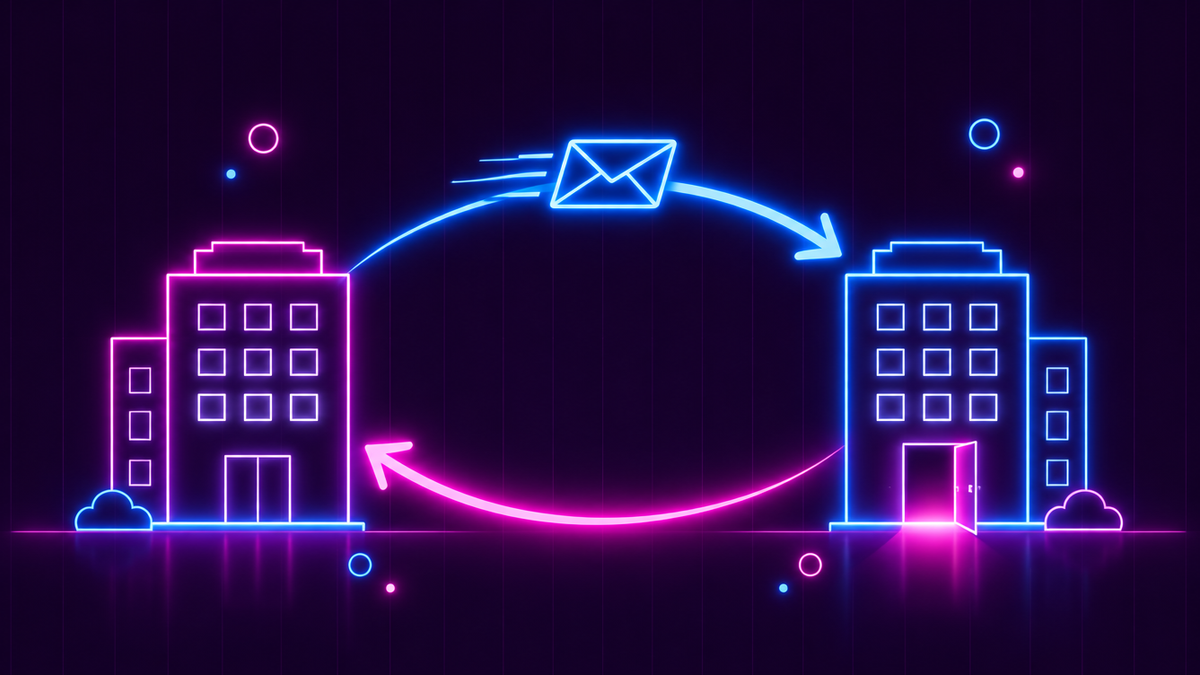
The difference between inbound and outbound sales lies in the approach: inbound attracts customers to you with valuable content, while outbound actively reaches out to them through direct contact. The right choice depends on your goals, resources and target audience, but the most effective B2B sales often combines both.
The reason is simple: no matter how loudly you beat the marketing drum, some potential buyers will never hear about you. To reach them, you need outbound. On the other hand, marketing pays off so that you don't have to approach every lead individually. But because marketing alone won't reach or activate everyone, inbound and outbound don't compete with each other – they complement each other.
Traditionally, outbound has been seen as cold calls and mass emails, but modern data and automation have completely changed the game. Instead of a poorly targeted "push" strategy, modern outbound is precise and well-reasoned.
What is inbound marketing? When the customer finds you
Inbound marketing is a "pull" strategy for customer acquisition. The goal is to be so useful and easy to find that potential customers come to you themselves when looking for a solution to their problem. You don't interrupt their day; you are ready to help when they need it.
Typical methods include:
- Content marketing: Blog articles, guides and webinars that answer customers' questions.
- Search engine optimisation (SEO): Making sure your company can be found on Google when someone is looking for the service you offer.
- Social media: Sharing valuable content and taking part in conversations builds your brand and trust.
- Email lists: Newsletters and marketing automation that nurture existing leads.
Inbound is a marathon, not a sprint. It requires patience and long-term work, but it pays off over time. Once your content starts producing a steady flow of leads, it works like compound interest – work done once delivers results for years. It suits companies whose customers actively search for information online before making a purchase decision.
What is outbound sales? When you find the customer
Outbound sales is a "push" strategy in which you actively and directly contact carefully selected potential customers. You don't wait for them to find you; you take your message directly to them.
Traditionally, this has been associated with cold calls and generic emails. Modern, data-driven outbound, however, is something else entirely. It is not mass communication but individual, well-reasoned outreach.
Typical methods include:
- Targeted emails: Individual messages based on known facts about the company, such as whether it exports, what systems it uses or whether it has recently closed a funding round.
- Sales calls: No longer calls based on a list, but calls with a clear, data-based reason.
- LinkedIn outreach: Direct contact with decision-makers through a personalised message.
Outbound is effective when you want fast results and have a clear picture of your ideal customer. It lets you fully control the top of your sales pipeline and ensure your calendar fills up with meetings with exactly the right companies. It is especially powerful when launching a new service or testing a new market.
Inbound vs. outbound: Key differences
- Initiative – Inbound marketing (pull): The customer searches for and finds you. Outbound sales (push): You search for and find the customer.
- Approach – Inbound marketing (pull): Attracting with content. Outbound sales (push): Direct and active outreach.
- Targeting – Inbound marketing (pull): Broad (topics, keywords). Outbound sales (push): Precise (company, decision-maker, situation).
- Time frame – Inbound marketing (pull): Slow, long-term, lasting. Outbound sales (push): Fast, results in the short term.
- Communication – Inbound marketing (pull): One-to-many (publishing). Outbound sales (push): One-to-one (personalised message).
- Resources – Inbound marketing (pull): Content production, SEO expertise. Outbound sales (push): Sales time, data, tools.
- Measurement – Inbound marketing (pull): Website traffic, conversions. Outbound sales (push): Number of contacts, reply rate.
Modern outbound isn't spamming – it's data and reasons
The biggest mistake is to think of outbound as an old-fashioned mass approach. At Zefram, we don't believe in that. We believe every outreach in B2B sales has to be earned. It is earned by doing your homework.
Doing your homework doesn't require some magical buying window. It's enough to have a well-founded reason why a company would likely benefit from what you offer. Often it can be found in the company's circumstances, meaning relatively permanent facts. These don't just mean industry or revenue; they can be answers to very specific questions: Does the company appear on the first page of a relevant Google search? Does it own buildings worth at least a million euros? Is the cost per employee over €80,000 a year? Are the company's interest expenses more than 8% of its long-term liabilities? This kind of information is exactly what sets precise targeting apart from, for example, LinkedIn-based tools alone. Sometimes the reason is a change in the company, often called a sales signal. These can include:
- New decision-maker: A new leader often looks at operations with fresh eyes and is open to new ways of working.
- Recruitment: The company is hiring new salespeople, which indicates investment in growth and a need to make the sales process more efficient.
- Technology adoption: The company starts using a certain technology, which opens the door to complementary services.
- Rebranding: A rebrand often signals a new strategy and openness to new partners.
When you know why you are contacting this particular company, the conversation changes completely. You are no longer just one seller among hundreds but a relevant expert with a well-founded reason to be in touch. This is the core of modern outbound sales.
So which one suits you?
The choice between inbound and outbound depends heavily on your situation.
Choose inbound when:
- You have time to build your brand and trust over the long term.
- You sell a product or service that customers actively search for online.
- Your resources are weighted towards marketing and content production.
- You want to create a lasting lead source that works independently in the future.
Choose outbound when:
- You need results quickly and predictably.
- You know exactly what kind of companies you want as customers (Ideal Customer Profile).
- You sell a high-value service or product whose buying cycle requires active sales work.
- You want to control who you talk to and when.
The best solution: Combine both
It is most effective when inbound and outbound support each other. Your inbound content (such as blogs and guides) builds your brand's credibility and serves as material you can use in your outbound messaging. For example, you can send a targeted email to a decision-maker and refer to an article that solves exactly their industry's challenge.
Outbound, in turn, gives you a direct channel to the dream customers who might never find your content organically. It is the tool that ensures your message reaches the right person with the right reason.
At Zefram, we specialise in making outbound sales more effective. Our AI-powered sales assistant automates the heavy lifting: it finds the right companies and decision-makers, enriches them with useful facts and writes a well-reasoned message that is sent in the seller's name and in their own voice. This frees the seller's time for what they do best: talking to potential customers and closing deals.
Frequently asked questions
What is the difference in initiative between inbound and outbound sales?
In inbound marketing, the customer searches for and finds the company themselves based on its content, while in outbound sales, the company actively searches for and finds the customer.
Which strategy is better for fast results?
Outbound sales is effective when you need fast and predictable results, as it lets you control the top of the sales pipeline and fill your calendar with meetings.
How does modern outbound sales differ from the traditional kind?
Modern outbound is not a mass approach; it is based on data and relevant facts, such as the company's visibility in Google search, financial data, the systems it uses or new decision-makers, so that each outreach is individual and well-reasoned.
How can inbound and outbound support each other?
Inbound content builds brand credibility and serves as material for outbound messaging, while outbound ensures the message reaches dream customers who might not find the content organically.
When should you choose inbound marketing?
Choose inbound when you have time to build your brand over the long term, sell a product that customers search for online, and your resources are weighted towards marketing and content production.